

Which beauty app should you choose to understand your products?
A cream with reassuring packaging may hide a thirty-line list of ingredients written in Latin and technical English. Scanning apps promise to translate this list in a matter of seconds. But you still need to know which one to download: not all of them analyze...

A cream with reassuring packaging may hide a thirty-line list of ingredients written in Latin and technical English. Scanning apps promise to translate this list in a matter of seconds. But you still need to know which one to download: not all of them analyze products the same way, and two apps may give conflicting results for the same product.
Key Takeaways
- For a quick decision while shopping: Yuka or QuelProduit—both are free and easy to read at a glance.
- To understand each ingredient: INCI Beauty and Clean Beauty, which explain the function of each component.
- To find out if a product is right for your skin: BeautyDecoded, which matches the product's ingredients with a personalized skin profile.
- No app can replace a dermatologist: the ratings are based on different methods and may vary.
What is a beauty app used for?
A cosmetics app scans a product's INCI list (International Nomenclature of Cosmetic Ingredients), the mandatory list of ingredients that must appear on the packaging of cosmetics sold in Europe. It explains each ingredient in plain language and flags those that raise concerns: allergens, irritants, and suspected endocrine disruptors.
There are two ways to scan. Most apps scan the barcode and look up the ingredients in their database. Others directly read the list of ingredients from a photo, which is handy for products not in the database or purchased abroad.
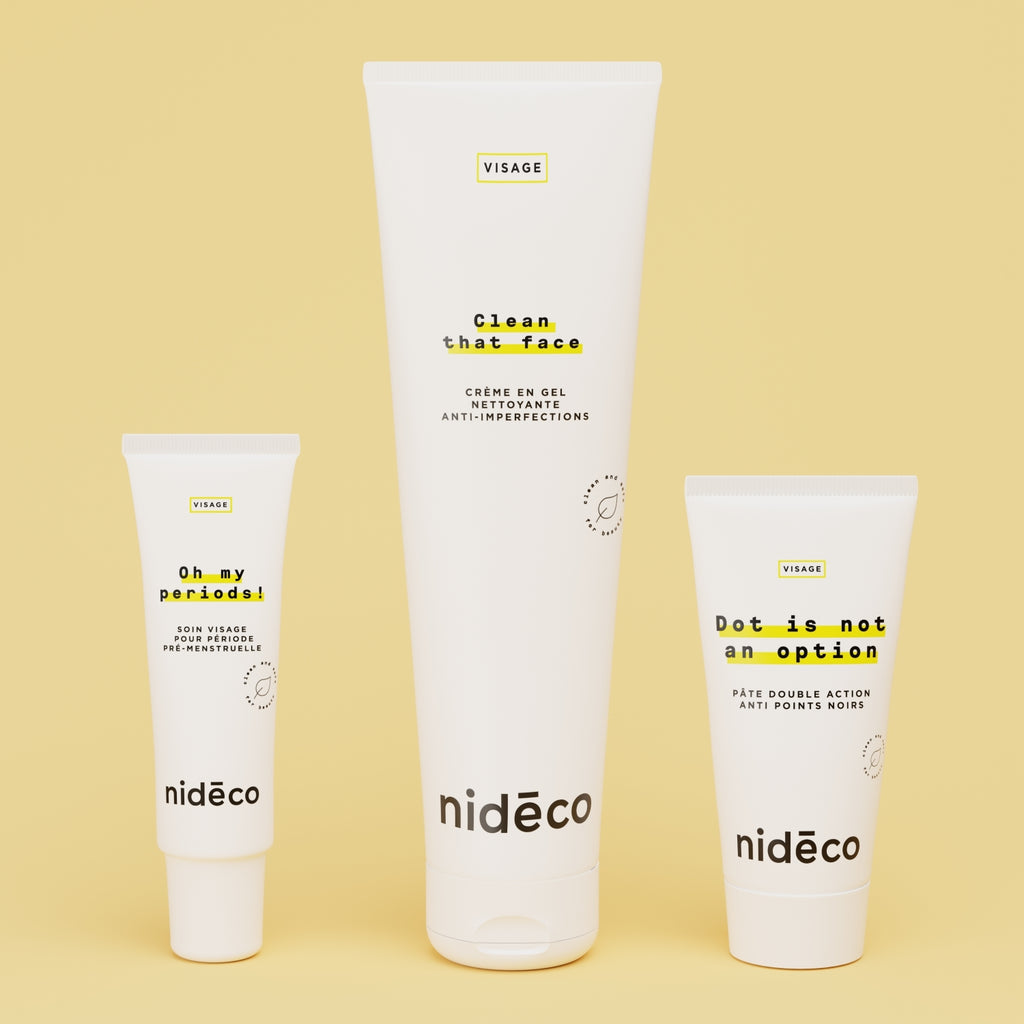
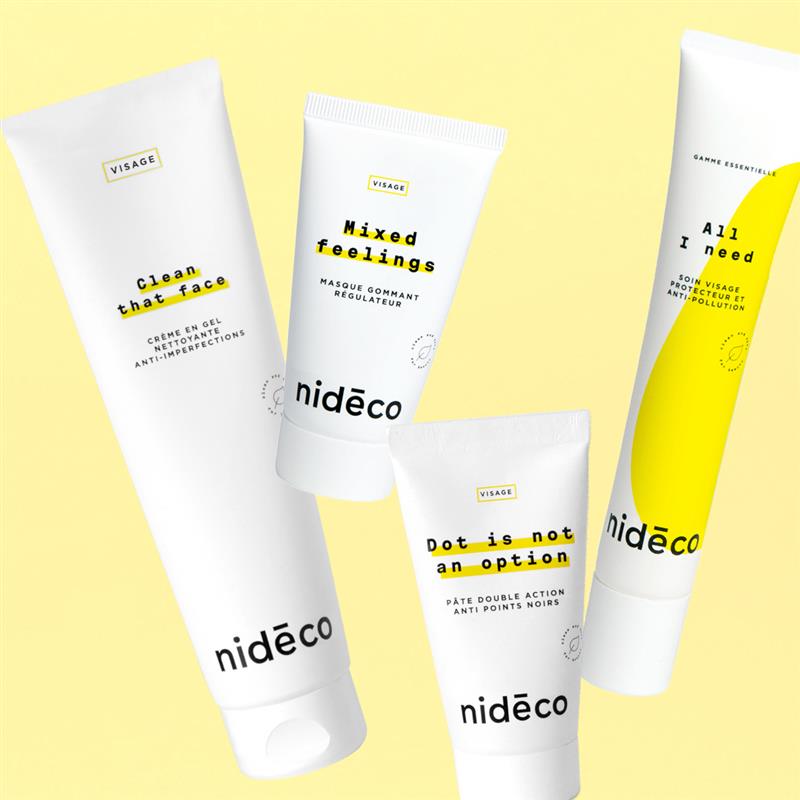
This is particularly important for reactive or blemish-prone skin: identifying a fragrance, a drying alcohol, or an active ingredient that you’re sensitive to before making a purchase can save you a lot of disappointment. A cleanser designed for blemish-prone skin, such as the Clean That Face gel-cream cleanser, should be chosen based precisely on its ingredients.
What are the best apps for analyzing your cosmetics?
Yuka, best known for her quick verdicts
Created to analyze food products, Yuka expanded its scanning capabilities to cosmetics in July 2018. The app assigns a score out of 100 and classifies ingredients according to four risk categories: endocrine disruptors, allergens, irritants, and carcinogens. Its founders claim that their analysis is independent, with no advertising or partnerships with brands.
Its strength is its simplicity. Its limitation: the overall rating sums everything up in a single number, without taking skin type into account.
QuelProduit, the free app from UFC-Que Choisir
Launched in 2018 under the name QuelCosmetic, the app from the UFC-Que Choisir association has been renamed QuelProduit and now covers food, cosmetics, and household products. According to the association, its database contains more than 370,000 product listings, including 230,000 cosmetics. Free and ad-free, it offers higher-rated alternatives within the same product category.
According to a report published by UFC-Que Choisir in April 2024, the percentage of cosmetics in its database containing at least one undesirable ingredient fell from 45.9% when the app was launched to 15% six years later.
INCI Beauty: Understanding Every Ingredient
Developed by students in Clermont-Ferrand, INCI Beauty rates products on a scale of 20 and provides a detailed profile for each ingredient, including its function, origin, and usage restrictions. Users can also take a photo of a list of ingredients to have it analyzed. The app is free, with a premium version that removes ads.
It's the most educational tool for learning how to read a label rather than relying on a note.
Clean Beauty: No Rating, but Well-Documented
Clean Beauty doesn't scan the barcode; instead, it uses optical character recognition to read the INCI list itself. Most importantly, it doesn't assign any ratings: it flags controversial ingredients, explains why they're controversial, and provides a glossary of the most common ingredients.
A good choice for forming your own opinion, without a pre-determined conclusion.
BeautyDecoded: Personalization Based on Your Skin Type
BeautyDecoded is based on a simple observation: an ingredient that is well tolerated by dry skin may cause problems for oily or sensitive skin. This beauty app, founded by a doctor specializing in aesthetic medicine, matches the composition of each product with one of 80 skin profiles to indicate whether the product is truly suitable for the user’s skin.
It also offers routine tracking and the ability to identify endocrine disruptors. It’s the most useful app for creating a personalized routine that goes beyond a simple “good or bad” classification.
How do you choose the right cosmetic app for your needs?
| Application | Analysis Method | Grading System | Ideal for |
|---|---|---|---|
| Yuka | Scan the barcode | Score out of 100 | A quick decision in-store |
| WhatProduct | Scan the barcode | Color-coding | Find a higher-rated alternative |
| INCI Beauty | Barcode or photo of the list | Score out of 20 | Understanding Each Ingredient |
| Clean Beauty | Photo of the INCI list | No rating | Forming Your Own Opinion |
| BeautyDecoded | Skin Scan and Profile | Depending on the skin type | A routine tailored to your skin |
For skin prone to breakouts
It’s best to use a product that takes your skin type into account: a comedogenic ingredient doesn’t have the same effect on oily skin as it does on dry skin. For more information, the guide to blackhead-free skin details the right steps to take, and a dual-action blackhead-removing paste targets clogged pores.
The breakouts that recur every month before your period are caused by a different mechanism—hormonal changes. A facial treatment for the premenstrual period addresses this specific need.
For sensitive skin
Apps that list allergens and fragrances, such as INCI Beauty or BeautyDecoded, are the most useful. Exfoliation products should also be chosen carefully: a gentle exfoliating mask for sensitive skin minimizes the risk of irritation.
Are cosmetic apps reliable?
All apps use the INCI list as a starting point, but they don't all interpret it the same way. In a comparison published by Tom's Guide, an ingredient like styrene was rated green—meaning "satisfactory"—by QuelCosmetic, but orange by INCI Beauty.
For its part, FEBEA, the federation of beauty companies, has called on app developers to exercise greater scientific rigor and adopt common analytical methods.
Databases aren't always up to date. In a test reported by CosmeticOBS, Yuka indicated the presence of a paraben that had been banned for several years: the listed ingredients dated from before the product was reformulated.
The right approach: Use the app as a first step, then check the INCI list on the packaging, and consult a dermatologist if you experience a skin reaction.
How do you read an INCI list without an app?
- The order matters: ingredients are listed in descending order of concentration. The first ones make up the majority of the formula.
- If the percentage is less than 1%, the order is flexible: the last ingredients on the list can appear in any order.
- The Latin names for plants: "Aloe Barbadensis Leaf Juice" refers to aloe vera.
- "Perfume" or "Fragrance" refers to a blend of scent-producing ingredients; use with caution on sensitive skin.
Nidéco's natural cosmetic formulas, made in France, are co-created with their community: anyone can suggest a skincare idea or vote for a future product on the " Projects Up for Vote" page.